Have you ever pulled a glass from the dishwasher and wondered why it looks cloudy despite being freshly washed? Or spent ages cleaning the shower screen, knowing those stubborn white deposits will probably return by next weekend? Hard water has a quiet way of making ordinary household tasks more difficult than they need to be.
Investing in suitable water treatment for hard water can help homeowners address excessive mineral concentrations rather than continually dealing with their visible effects.
Of course, choosing the right equipment takes a little consideration. Different households have different water conditions, consumption habits, and budgets. Understanding these differences can help you find a practical solution without spending money on features you don’t really need.
Why Hard Water Can Be Such a Headache
Hard water contains dissolved calcium and magnesium, naturally occurring minerals collected as water moves through underground rock formations and soil.
Although these minerals aren’t inherently harmful to most people, they can create quite a few problems around the house.
When water evaporates, mineral residue remains behind. Over time, it can accumulate around faucets, showerheads, bathroom tiles, and kitchen sinks.
Hardness also affects the performance of certain soaps and detergents. You may find yourself using more cleaning products without getting noticeably better results.
Then there’s the mineral buildup happening inside appliances, where it’s considerably harder to spot.
These issues rarely disappear on their own. Without addressing excessive hardness, homeowners can find themselves stuck in an endless cycle of cleaning and descaling.
How Water Softening Tackles the Underlying Problem
Scrubbing mineral deposits from bathroom fixtures might improve their appearance, but it doesn’t change the composition of incoming water.
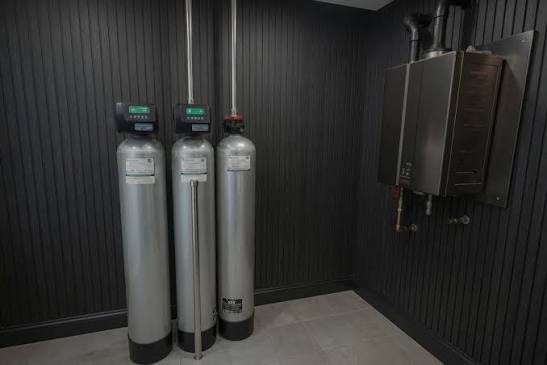
Conventional softening systems for household water use ion exchange to reduce dissolved calcium and magnesium before treated water reaches connected fixtures and appliances.
Specialized resin beads inside the equipment exchange hardness ions for sodium or potassium ions. Periodic regeneration restores the resin’s treatment capacity.
Modern systems may incorporate demand-based controls that determine regeneration requirements according to measured water consumption.
When appropriately configured, these controls can help limit unnecessary salt and water usage.
Softening isn’t comprehensive water purification, though. Additional treatment may be necessary if testing identifies other unwanted substances or potentially harmful contaminants.
Exploring Water Softening and Conditioning Alternatives
Shopping for treatment equipment can become confusing rather quickly. Traditional salt-based softeners, salt-free conditioners, and programmable systems all offer different capabilities.
When comparing water softener options for homeowners, it’s worth considering measured hardness, installation requirements, household consumption, and ongoing maintenance expenses.
Traditional ion-exchange equipment reduces hardness minerals directly. Certain salt-free conditioning technologies are instead designed to manage scale formation under suitable water conditions without removing calcium and magnesium.
This distinction matters, particularly if your main objective is improving soap performance rather than simply managing mineral deposits.
Before purchasing anything, think about what you’re hoping to achieve. A system that addresses your particular concerns is far more valuable than one with an impressive list of unnecessary features.
Giving Your Household Appliances Some Extra Protection
Nobody wants to replace an expensive water heater sooner than expected. Unfortunately, hard water can contribute to mineral accumulation inside equipment that regularly heats water.
Scale deposits may interfere with heat transfer and increase maintenance requirements over time.
Reducing excessive hardness can help limit future mineral buildup, supporting a more preventive approach to appliance maintenance.
Existing deposits may still require separate cleaning or professional servicing, so don’t expect a newly installed softener to reverse years of accumulation overnight.
Think of water softening as an investment in looking after what you already own.
Considering the cost of household appliances, preventing avoidable mineral buildup is certainly worth considering.
The Little Everyday Benefits That Make Softening Appealing
Not every home improvement needs to be dramatic. Sometimes, the most enjoyable changes are the ones you notice during ordinary routines.
Soap may lather more easily during your morning shower. Glassware might develop fewer mineral spots, and bathroom fixtures may remain presentable for longer.
Reduced hardness can also improve the performance of certain laundry detergents. You might even need to reconsider how much detergent you’re adding to each wash.
Some homeowners notice that softened water feels slightly slippery when bathing. It’s an unfamiliar sensation at first, but many people become accustomed to it.
The biggest advantage for busy families may simply be spending less time dealing with repetitive cleaning tasks.
Practical Things to Consider Before Installation
A water softener should suit your property rather than force your household to adjust around the equipment.
Consider available installation space, incoming water pressure, daily consumption, and peak demand.
Ask about salt replenishment, regeneration water usage, warranty coverage, and replacement component availability.
Reliable water testing is also important before selecting equipment. An incorrectly sized system may regenerate too frequently or struggle to provide consistent treatment.
Homeowners following medically prescribed sodium restrictions should discuss softened drinking water with an appropriate healthcare professional.
Taking these practical details into account early can help prevent unexpected expenses and maintenance frustrations later.
Making Your Home More Comfortable With Softer Water
Managing excessive water hardness doesn’t need to become an expensive or complicated project.
Begin with reliable testing, choose equipment that meets your household’s requirements, and follow a consistent maintenance routine.
Over time, suitable softening can help make cleaning more manageable, limit future mineral accumulation, and improve familiar household experiences.
After all, a comfortable home isn’t necessarily filled with expensive upgrades. Sometimes, it’s simply a place where everyday things work a little better.
And if that means spending Sunday afternoon relaxing instead of scrubbing limescale from the shower, it’s an improvement that deserves some serious consideration.