There’s something quietly comforting about loading a dishwasher at the end of a long day. Plates scraped, glasses stacked, detergent in, door closed. You press start and walk away. It’s one of those small modern luxuries we don’t think much about—until it stops working.
Then suddenly you’re staring at cloudy glasses, puddles on the floor, or worse… a machine that hums but does absolutely nothing useful.
I’ve had my share of dishwasher drama. And if there’s one thing I’ve learned, it’s this: most problems look scarier than they actually are. With a bit of patience (and maybe a towel nearby), many issues can be sorted without full-blown panic.
When the Dishes Just Aren’t Getting Clean
Let’s start with the subtle stuff. You open the door after a cycle and notice bits of food still clinging to plates. Or a white film on your glasses that definitely wasn’t there before.
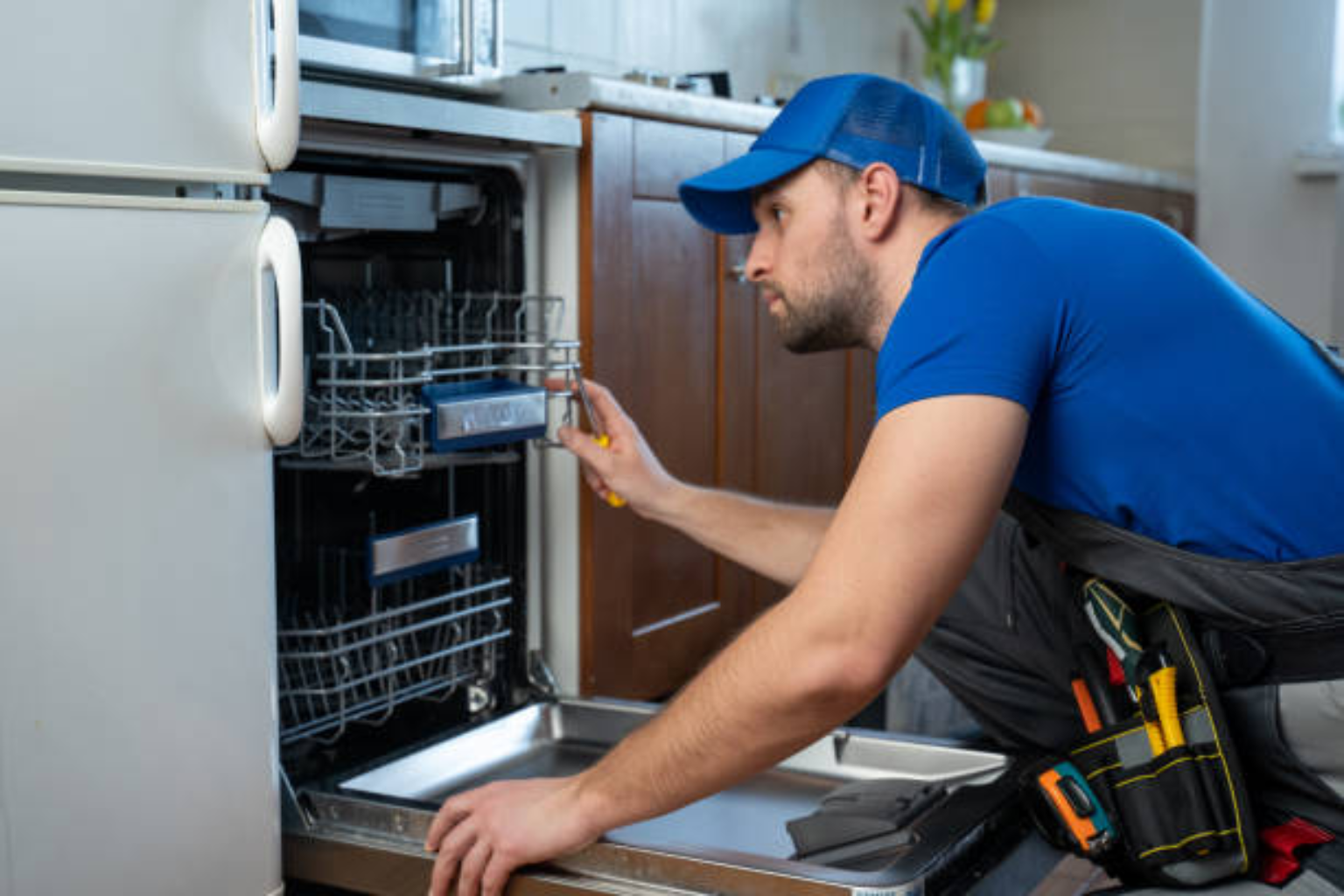
Before assuming you need major dishwasher repairs, check the basics. Is the spray arm clogged? Tiny food particles can block those little holes, limiting water pressure. Unscrew it, rinse it out, and you might be surprised at the difference.
Also, take a look at the filter at the bottom of the tub. Many people don’t even realize their dishwasher has one. Over time, it collects debris that can interfere with washing performance. Cleaning it every few weeks can prevent bigger headaches later.
Hard water buildup is another quiet culprit. If you live in an area with mineral-heavy water, using a rinse aid or occasional cleaning cycle with vinegar can help restore clarity to your glassware.
Sometimes the fix is less dramatic than you think.
The Dreaded Puddle on the Kitchen Floor
Few things get your attention faster than water pooling beneath the dishwasher. It feels urgent—and honestly, it is.
A leak repair often starts with inspecting the door gasket. That rubber seal around the door can crack or warp over time. Even a small tear can allow water to escape during a wash cycle. Replacing it is usually straightforward and relatively inexpensive.
Loose or damaged inlet hoses can also cause leaks. Pull the dishwasher out carefully and inspect the connections. Check for moisture around the water supply line and drain hose. Tightening a fitting might be all that’s required.
If water appears from underneath the unit, the issue could be a faulty pump seal or internal hose. That’s when things get a bit more involved. It’s not impossible for a handy homeowner, but it does require confidence—and patience.
The key is not to ignore it. Water damage spreads quietly, especially under cabinets where you can’t see it.
Standing Water That Just Won’t Go Away
You finish a cycle, open the door, and there it is: a shallow pool of murky water sitting at the bottom of the tub. It’s frustrating, and slightly gross.
Most drainage issues trace back to a clogged filter or blocked drain hose. Food debris, grease, even small bits of broken glass can obstruct proper draining. Cleaning the filter thoroughly is step one. After that, inspect the drain hose for kinks or blockages.
Sometimes the problem isn’t the dishwasher at all. If your sink drain is clogged, the dishwasher may struggle to empty properly because they often share plumbing connections.
A faulty drain pump is less common but possible. If you hear a humming sound without water movement, the pump might be trying—and failing—to do its job.
Strange Noises and Odd Smells
Dishwashers aren’t silent, but they shouldn’t sound like a toolbox tumbling down stairs either. Grinding noises may signal something stuck in the pump. A rattling sound could simply be a utensil hitting the spray arm.
And then there’s that smell. That faint, sour odor that seems to linger no matter how clean your kitchen is. Usually, it’s trapped food debris hiding in the filter or along the door seal. A deep clean—filter, spray arms, gasket—often solves it.
Running an empty hot cycle with a dishwasher cleaner every couple of months helps prevent buildup. It’s a small habit that can extend the life of the appliance.
When DIY Stops Making Sense
There’s a line between routine maintenance and more complex mechanical failure. Control boards, float switches, heating elements—these components aren’t always obvious to diagnose without tools and experience.
If your dishwasher won’t start at all, shuts off mid-cycle, or repeatedly trips your breaker, it might be time to call a professional. Electrical issues aren’t worth guessing your way through.
That doesn’t mean you’ve failed by not fixing it yourself. It simply means the problem requires a deeper look.
Repair or Replace? The Kitchen Table Debate
Most dishwashers last around 9 to 12 years, depending on usage and maintenance. If yours is older and facing a costly repair, replacement might make more financial sense.
But if the issue is a simple pump replacement or door seal? That’s often worth fixing.
Think about how the machine has performed overall. Has it been reliable? Quiet? Efficient? Or has it been giving you trouble for a while now?
There’s no universal answer. It’s a personal decision—one part budget, one part convenience, one part tolerance for disruption.
A Quiet Reminder About Maintenance
Dishwashers are easy to take for granted. They sit under the counter, out of sight, doing the messy work for us. But they’re still mechanical systems. They need occasional care.
Clean the filter. Check the spray arms. Inspect hoses annually. These small steps prevent bigger problems down the road.
And if something does go wrong, don’t assume the worst. Start simple. Work through the basics. Listen to what the machine is telling you.
In most cases, the solution isn’t as dramatic as it first feels.
When your dishwasher runs smoothly, it blends into the background of daily life. But when it falters, it reminds you just how much you rely on it.
Fixing it—whether on your own or with help—isn’t just about clean dishes. It’s about restoring that small, satisfying rhythm to your kitchen routine.