There’s something quietly satisfying about pouring a glass of water from your own tap and not giving it a second thought. No hesitation. No aftertaste. No mental calculation about whether you should have bought bottled water instead.
For a lot of homeowners, that confidence doesn’t happen automatically. It comes after a little research, maybe a water test, and eventually a decision to upgrade what’s happening under the sink.
But here’s the thing—filtration systems can get confusing fast. Technical specs. Layered marketing claims. Buzzwords that sound impressive but don’t mean much unless you’re an engineer.
So let’s slow it down and talk about what really matters.
Why Taste Is the First Clue
Most people don’t start exploring filtration because of a lab report. They start because of taste.
Maybe the water has a faint chlorine note. Maybe it tastes slightly metallic in older homes. Or maybe it’s fine, but not great.
Taste isn’t trivial. If your water doesn’t taste good, you’ll drink less of it. You’ll reach for soda, juice, or bottled water. And that small daily shift adds up.
Improving drinking water quality isn’t just about removing contaminants. It’s about making water something you actually enjoy.
Breaking Down Multi-Stage Filtration
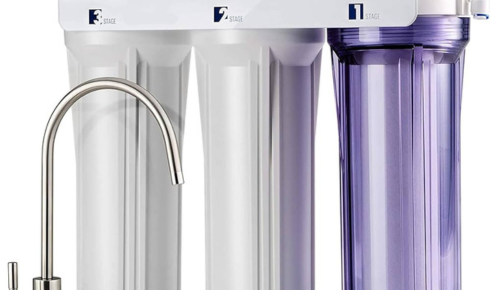
Many modern under-sink systems rely on layered filtration instead of a single filter cartridge. A properly designed three-stage filtration setup often includes a sediment filter, a carbon filter, and an additional polishing stage.
The sediment stage catches visible particles—sand, rust, debris. The carbon stage addresses chlorine, odors, and certain organic compounds. The final stage refines taste and clarity.
Layering matters because each filter handles a different task. Instead of one filter trying to do everything, each component does its part efficiently.
It’s not flashy. It’s practical.
The Role of a Prefilter
One detail that doesn’t get enough attention is the prefilter. In many systems, a high capacity prefilter acts as the first line of defense.
Why does that matter?
Because sediment and larger particles can clog finer filters downstream. A strong prefilter extends the life of the rest of the system, maintaining flow rate and reducing maintenance frequency.
Think of it like a good pair of boots before a long hike. Protect the foundation, and everything else lasts longer.
Flow Matters More Than You Think
Some homeowners worry about slow trickles from filtration systems. That’s a common complaint with older designs.
Newer systems often focus on maintaining strong flow while still delivering effective filtration. That balance is critical. If filling a glass takes too long, frustration builds quickly.
When designed properly, systems like the aquakinetic drinking system rely on water pressure itself rather than electricity to operate efficiently. That mechanical simplicity often translates into consistent performance without added complexity.
Less wiring. Fewer parts. Fewer things to troubleshoot.
Do You Need Reverse Osmosis?
Reverse osmosis (RO) gets a lot of attention, and in some areas, it’s absolutely warranted—especially where dissolved solids or nitrates are elevated.
But not every home requires RO.
If your primary concerns are chlorine taste, odor, or sediment, a well-designed multi-stage carbon system may be sufficient. It comes down to testing.
Before investing in any equipment, get your water tested. Municipal reports provide baseline information, but a local test can reveal hardness, total dissolved solids, and specific contaminants.
Data beats guesswork every time.
Maintenance: The Reality Check
No filtration system runs forever without attention.
Filters need replacing. Prefilters need checking. Schedules vary depending on water usage and local conditions.
The good news is that most modern systems are built for homeowner-friendly maintenance. Cartridge swaps are straightforward. Replacement intervals are predictable.
What matters most is consistency. Ignoring filter changes reduces performance and defeats the purpose of installation.
Environmental and Lifestyle Impact
One underrated benefit of installing a home drinking system is reducing bottled water consumption.
When your tap water tastes good, you stop buying plastic bottles out of convenience. That’s a small shift with long-term environmental impact.
And there’s something deeply satisfying about filling a reusable bottle straight from your own sink without hesitation.
It feels… self-sufficient.
Avoiding Overcomplication
It’s easy to fall into the trap of overengineering your solution.
You don’t need the most advanced system on the market if your water doesn’t demand it. You need the right system.
Start with clarity about your goals:
- Better taste?
- Reduced chlorine?
- Protection from sediment?
- Lower dissolved solids?
Match the equipment to the need.
The Everyday Difference
The biggest changes aren’t dramatic. They’re subtle.
You pour water into a pot for pasta without wondering if it will affect flavor. You make coffee that tastes clean. You hand your child a glass of water confidently.
Water becomes background again—reliable, neutral, refreshing.
And honestly, that’s the ideal outcome.
Final Thoughts
Home water filtration doesn’t have to feel technical or overwhelming. At its core, it’s about aligning your system with your water profile and your lifestyle.
A thoughtful multi-stage setup, supported by a solid prefilter and steady flow, can transform daily drinking water without turning your kitchen into a laboratory.
Test your water. Understand your needs. Choose simplicity and reliability over hype.
Because when your water tastes clean and consistent, you stop thinking about filtration entirely.
And that quiet confidence? That’s the real upgrade.